
Advertisement
South Africa Strikes Escalate With Petrol Stations Dispute
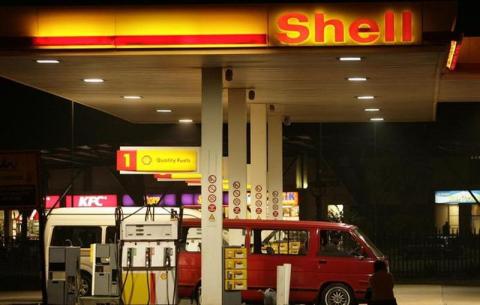
A customer waits to be attended to at a petrol station in Soweto March 11, 2009. PHOTO BY REUTERS/Siphiwe Sibeko.
By Ed Stoddard and David Dola
27/08/2013
JOHANNESBURG (Reuters) - South Africa's petrol station and car dealership workers on Tuesday announced a strike for higher wages next week, signaling further labour disruption to a struggling economy that also faces looming stoppages in its gold mines.
Citing escalating living and transport costs, the country's leading manufacturing union NUMSA said its 72,000 members working in petrol stations, automotive retail shops and car dealerships would halt work from Monday "in demand of a living wage and improved conditions".
Africa's largest economy is already facing a wave of wage increase demands and strikes by increasingly militant workers in several sectors, posing a renewed labour headache for President Jacob Zuma's government after violent mines strikes last year dented growth and led to sovereign credit downgrades.
The petrol station and car dealership employees will join workers from South Africa's auto industry who have already downed tools for a week in a wage dispute, costing the economy an estimated $60 million a day.
Strikes also started this week in the country's construction and airport sectors, but their impact has been limited so far.
"Workers are no longer willing to be subjected to starvation and poverty wages," the National Union of Metalworkers of South Africa (NUMSA) said in a statement announcing the strike from Monday. It said wage talks with employers had reached deadlock.
More worrying for South Africa's faltering economy is the looming prospect of stoppages in the gold and platinum mines, where unions demanding pay hikes of between 60 and 150 percent are on an apparent collision course with producers battling rising costs and falling metals prices.
On Saturday, the main mining union NUM gave bullion producers, including AngloGold Ashanti, Gold Fields, Sibanye Gold and Harmony Gold, a seven-day ultimatum to meet its demand for pay rises of up to 60 percent or face strikes.
At current spot prices, a gold industry stoppage would cost the economy an additional $35 million in lost output daily.
"NOT TRIGGER-HAPPY"
The head of the main mining union NUM, Frans Baleni, held out a slight hope on Tuesday that a compromise could still be found with gold producers before the Friday deadline.
"A strike is always the last resort, we are not trigger-happy about a strike," Baleni, General Secretary of the National Union of Mineworkers (NUM), told Reuters on the sidelines of a mining conference in Johannesburg.
"We have said let the employers put something on the table ... If it was something reasonable then I am sure our members would consider it," Baleni added, indicating that NUM would be open to some kind of counter-offer by the companies.
A source at the country's chamber of mines, which is negotiating on behalf of the gold producers, said: "Some compromises have been mooted by the NUM, but no revisions have been formally tabled."
Gold companies say they can ill afford the union pay demands.
But Kgalema Motlanthe, deputy president in Zuma's ruling African National Congress (ANC) government, on Tuesday expressed sympathy for the mineworkers, saying the industry had for years under apartheid, "developed methods of making super-profits by relying on the super-exploitation of unskilled workers".
"Sadly, the mining industry has remained a prisoner of its apartheid past in this core element of cheap labour sourced through a migrants punishing annual work cycle and all the social evils associated with that cycle," he told the mining conference. Apartheid ended in 1994.
The ongoing and threatened strikes are expected to further hit South Africa's growth prospects, even though the country registered an acceleration of growth in the second quarter thanks to a robust expansion in manufacturing.
GDP expanded 3.0 percent quarter-on-quarter, the highest figure for a year, Statistics South Africa said on Tuesday.
Despite this upbeat number, the rand hovered near the four-year lows it plumbed last week over news of the start of the auto industry strike and the threatened gold industry stoppage.
The quarterly growth figure, which undershot economists' expectations of 3.3 percent, was largely due to a one-off bounce from the manufacturing sector, which grew 11.5 percent in the second quarter on a recovery in base metals.
Manufacturing is the second biggest sector in South Africa's economy. The industry's expansion in the second quarter was the highest since the first quarter of 2011, Stats S.A. said.








Add new comment