
Advertisement
French ex-commissioner to lead EU Brexit talks
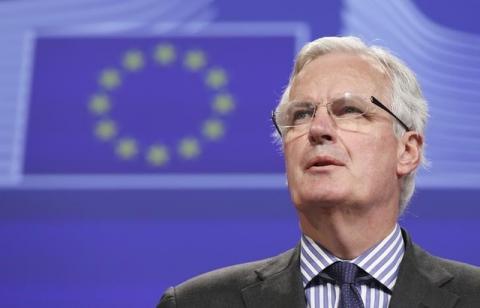
Michel Barnier addresses a news conference at the EU Commission headquarters in Brussels, April 9, 2014. PHOTO BY REUTERS/Francois Lenoir
By Philip Blenkinsop
27/07/2016
BRUSSELS (Reuters) - A French Gaullist politician who introduced a swathe of European financial regulation following the global financial crisis was appointed on Wednesday to lead negotiations on Britain's withdrawal from the European Union.
European Commission President Jean-Claude Juncker chose Michel Barnier, a former EU commissioner and center-right French foreign and agriculture minister, in a choice that may antagonize Britain's euroskeptic Conservatives.
Barnier will take up his post on Oct. 1, the EU executive said in a statement. He will report directly to Juncker and have the rank of a director-general of a Commission department, with all necessary resources at his disposal.
Barnier, 65, was a commissioner from 2010 to 2014, in charge of internal market and services. He was involved in reforms of financial services and for establishment of the banking union.
Juncker said Barnier was a skilled negotiator with rich experience in major policy areas and an extensive network of contacts in the capitals of EU member states.
"I wanted an experienced politician for this difficult job," Juncker said in the statement. "I am sure that he will live up to this new challenge and help us to develop a new partnership with the United Kingdom after it will have left the European Union."
The Commission statement did not say whether Juncker had consulted Britain or other EU member states before making the appointment. European Council President Donald Tusk, who chairs EU summits, had previously appointed Belgian EU official Didier Seeuws to oversee preparations for the Brexit negotiations.
It was not immediately clear what the relationship between Barnier and Seeuws would be.
Barnier presided over a frenzy of European financial rulemaking. More than 40 sets of rules were rushed onto the statute book, most based on global responses to the financial crisis. A hawkish European Parliament also insisted on caps for bankers’ bonuses, a reform Britain failed to stop.
But the Frenchman, who also co-organized the 1992 Winter Olympics in his home region of Albertville, prided himself on working mostly in consensus with the City, London's financial center.
There was no immediate response in London from British Prime Minister Theresa May's office nor from the new government department in charge of exiting the EU.
Barnier was succeeded in Brussels by Briton Jonathan Hill as commissioner in charge of financial service. Hill, who set about building a European capital markets union while trying to give the financial sector a breather from fresh regulation, resigned after Britain voted to leave the EU in a June 23 referendum.
(Writing by Paul Taylor; Editing by Larry King)

















Add new comment