
Advertisement
Tanzania to increase its 2016/17 budget spending by almost a third
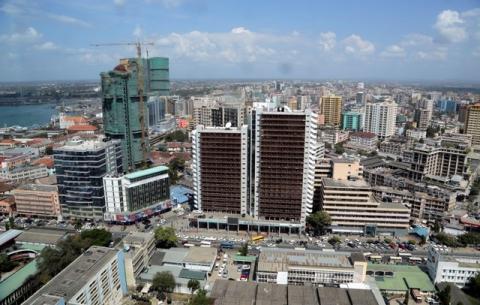
A general picture shows the skyline of Tanzania's port city of Dar es Salaam, July 12, 2013. PHOTO BY REUTERS/Andrew Emmanuel
By Fumbuka Ng'wanakilala
07/04/2016
DAR ES SALAAM (Reuters) - Tanzania plans to raise spending by 31 percent in the next fiscal year, focusing on infrastructure and industrial projects, a new draft budget proposal showed.
The draft presented by the Finance Ministry to Parliament on Wednesday and seen by Reuters on Thursday proposes spending of 29.53 trillion Tanzanian shillings ($13.53 billion) in fiscal year 2016/17, which starts on July 1.
In Wednesday's presentation, Finance and Planning Minister Philip Mpango said: "Some 17.71 trillion shillings will be allocated to recurrent expenditures, while 11.82 trillion will be set aside for development spending."
In the previous draft budget, released in February, the government said it planned to spend 22.99 trillion shillings in 2016/17, up from 22.49 trillion shillings in 2015/16.
The final budget for the new fiscal year is expected to be presented in parliament in June.
The revised budget outlook is an indication of spending plans under President John Magufuli, who was elected in October. The former public works minister promised to improve the African nation's creaking infrastructure and create more jobs.
"To speed up construction of infrastructure projects, the government plans to raise 2.101 trillion shillings from external non-concessional borrowing," Mpango said.
The government will borrow 5.37 trillion shillings from domestic lenders to settle maturing government treasuries, finance development projects and service arrears.
Development partners are expected to contribute 3.6 trillion shillings in loans and grants, equivalent to 12 percent of the total budget.
Tanzania, one of Africa's biggest per capita aid recipients, has recently faced aid delays and cancellations due to western donor concerns about corruption, the slow speed of reforms and disputed elections in the semi-autonomous Zanzibar archipelago.
The government said it plans to cut foreign aid dependency by boosting revenue collection.
"It is important to be independent in budget funding and thus avoid the risks of trying to implement development plans that are overly dependent on foreign aid which is unpredictable," Mpango told parliament.
He said the government plans to collect 15.1 trillion shillings in taxes in 2016/17, equivalent to 17.3 percent of the country's gross domestic product.
The government said it plans to cut the deficit to the equivalent of less than 3 percent of GDP in 2016/17 from 4.2 percent in the fiscal year ending this June.
Growth in east Africa's second-biggest economy is expected to rise to 7.2 percent in 2016 from 7.0 percent in 2015, Mpango said in his budget draft, while average annual inflation is seen stable at 6 percent in 2016.
(Reporting by Fumbuka Ng'wanakilala; Editing by Catherine Evans)
Add new comment